
PRODUCT
Connected Food
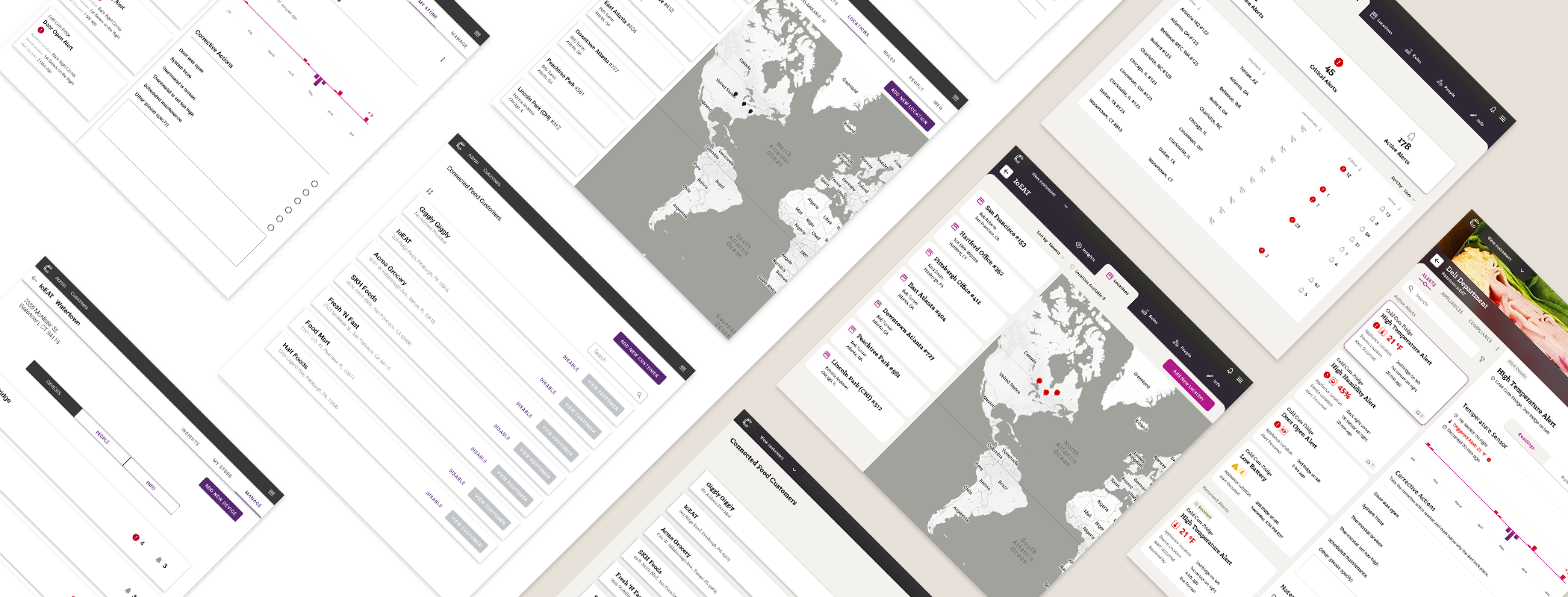
Connected Food: A Smarter, More Connected Experience for Food Operations
Connected Food is an IoT-powered solution designed to help food retailers monitor their operations, identify potential issues and make more informed decisions.
My role focused on facilitating user interviews and usability tests, translating research findings into design decisions and developing high-fidelity product experiences. I also contributed to establishing a dedicated design system to support consistency and scalability as the product evolved.
The Challenge
Food retailers manage complex operations across multiple locations, devices and systems. Important information can become fragmented, making it difficult for employees to identify issues and take timely action.
Our challenge was to create an intuitive experience that transformed operational data into accessible, actionable information while establishing a scalable foundation for a growing product.
The Design Process
1. Discovery & Research
I helped facilitate user interviews to better understand the needs, challenges and expectations of the people using Connected Food.
Our research explored how users understood the product’s navigation, how they expected information to be organized and how they would locate the tools needed to complete everyday tasks.
We focused on questions such as:
- Can users intuitively navigate between stores, appliances and connected devices?
- Does the information hierarchy reflect how users think about their operations?
- Are alerts easy to understand and actionable?
- Does the terminology make sense across both grocery and restaurant environments?
These questions helped us identify areas of uncertainty and establish what needed to be validated through usability testing.
2.Wireframing and Exploration
With a clearer understanding of user needs, we explored how to structure the application around the tasks users needed to accomplish. We used wireframes to evaluate navigation patterns, information hierarchy and workflows before investing in detailed visual design. The focus was on helping users move naturally between locations, appliances, alerts and device management without unnecessary complexity.
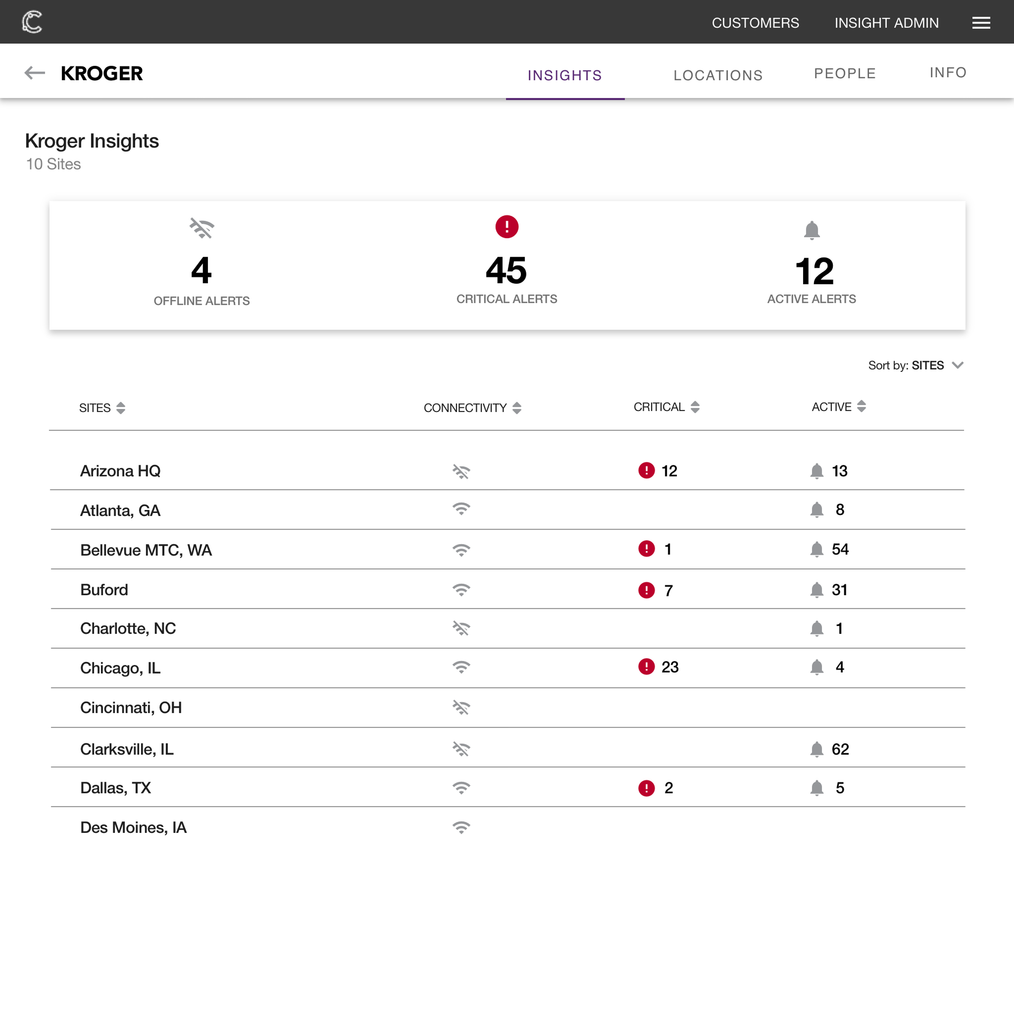
Wireframe for Admin view
3. Usability Testing and Iteration
Rather than relying solely on internal assumptions, we developed a structured usability testing strategy to evaluate whether the experience aligned with users’ expectations.
I facilitated user testing sessions focused on three primary areas:
- Navigation & discoverability – Could users find what they needed without guidance and did the navigation labels make sense?
- Information architecture – Were stores, appliances and devices organized in a way that matched users’ mental models?
- Task completion & comprehension – Could users interpret alerts, understand where to manage devices and navigate between related information?
The testing strategy included moderated, task-based sessions with approximately 60 minutes allocated for broader navigation and hierarchy testing. Shorter, focused tasks were planned for specific interactions.
Testing was intentionally prioritized early enough in the process to allow time for design changes.
I used findings from interviews and usability testing to inform the next stages of design, refining workflows, interface organization and interaction patterns as we moved toward high-fidelity prototypes.
4. High-Fidelity Design & Prototyping
As the product evolved, I translated the validated workflows into high-fidelity designs and prototypes. This stage focused on creating a cohesive interface that balanced operational complexity with clarity and usability. Particular attention was given to establishing consistent interaction patterns, clear information hierarchy and accessible pathways to important operational data.
5. Building the Connected Food Design System
As Connected Food evolved beyond its parent product, Connected Platform, we recognized the need for a dedicated design system. Although reusing the existing design system would have been the quickest approach, it risked creating technical debt as Connected Food developed its own identity and product requirements. We established a new system that maintained visual alignment with the parent platform while giving Connected Food the flexibility to grow independently.
Our workflow brought together Sketch for visual design, Abstract for version control, InVision Design System Manager for component documentation and Storybook to support design-to-development handoff. This shared foundation helped reduce ambiguity, improve collaboration and support faster, more consistent product development.
The Outcome
Connected Food brought together user-centered design and a more structured approach to product development. Through interviews, usability testing, iterative design and design system development, we established a foundation for an experience that could evolve alongside the product.
For me, the project reinforced the value of using research to guide design decisions rather than treating usability testing as a final checkpoint. It also demonstrated how a thoughtfully managed design system can improve not only the consistency of the interface but also the way design and development teams work together.