
PRODUCT
Property Timeline

Bringing Property Activity Into Focus
Branch Managers and Administrators oversee multiple properties, often needing quick access to activity such as invoices, payments, crew visits and audits. However, finding this information required navigating multiple pages, creating unnecessary friction especially when responding to client inquiries or checking on property progress.
The opportunity: Give users a faster, more contextual way to understand what’s happening at a property without interrupting their existing workflow.
The Solution
I designed a new Timeline tab within Aspire’s existing property side panel, bringing recent property activity into one centralized, chronological view. Accessible whenever a user selects a property name, the timeline provides an at-a-glance overview of recent events, with the ability to drill into individual records for additional details.
By extending an existing interaction pattern rather than introducing a new workflow, the feature helps users quickly find relevant information, understand where things stand and identify their next steps.
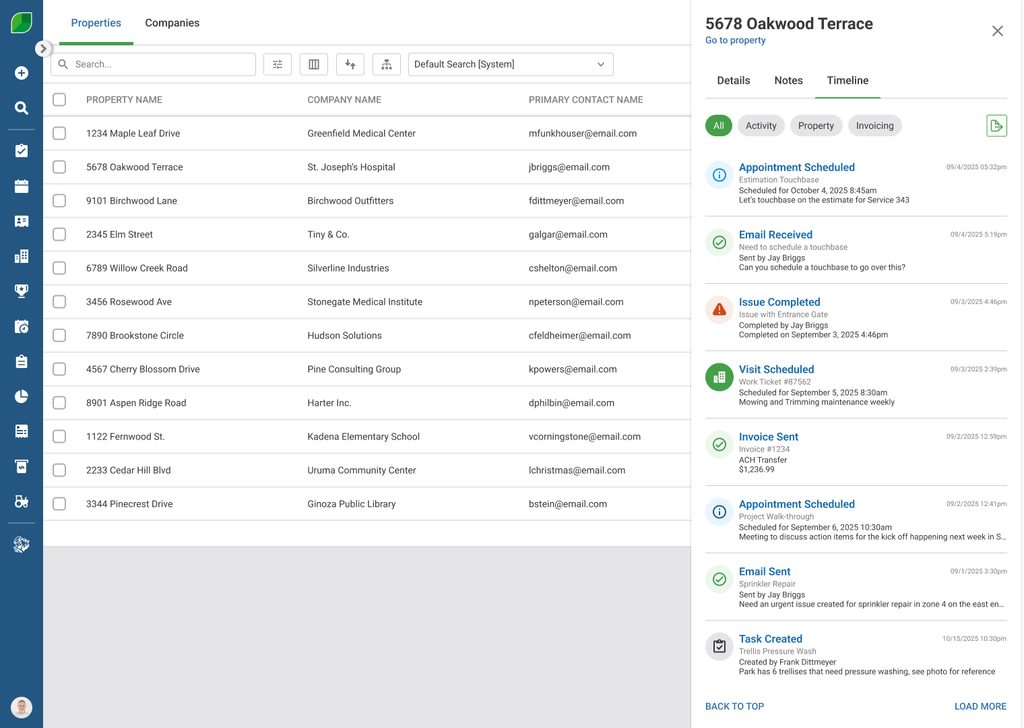
Property Timeline in the Sidepanel feature
Validating the Experience with Real Users
Building on previous user feedback and my work developing Aspire’s user personas, I created an interactive prototype to validate whether the timeline surfaced the information users actually needed. With Aspire’s annual Ignite conference approaching, I recognized a valuable opportunity to test the concept directly with the people who would use it.
I designed and facilitated a Maze usability study, combining structured testing with in-person conversations with customers at the conference. Beyond evaluating the prototype, these conversations helped me better understand users’ expectations, uncover opportunities for improvement and explore how the timeline could support their day-to-day workflows.
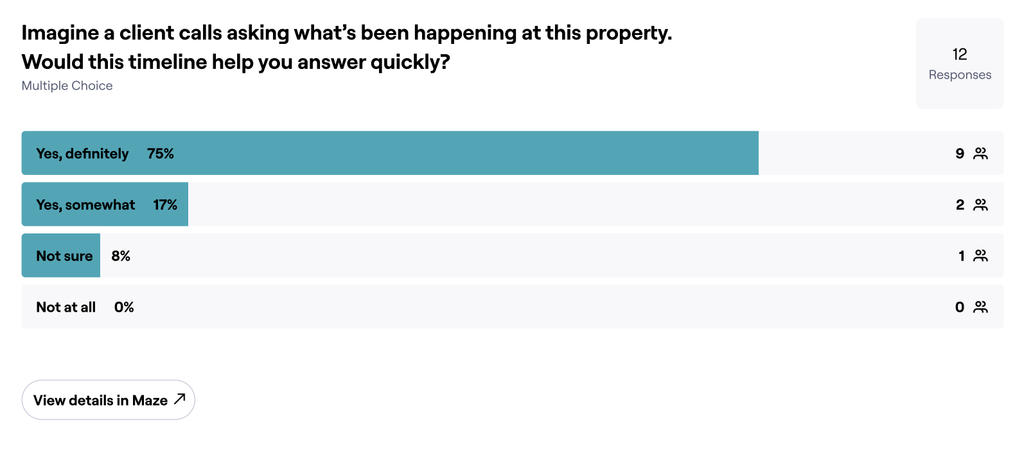
An example of data from the Maze study
Turning Feedback Into Action
The research surfaced valuable insights that helped refine the timeline experience before development. I incorporated actionable feedback into the final designs and collaborated with the product owner to identify additional enhancements for the product backlog. This approach helped ensure that design decisions were informed by actual user needs rather than assumptions, while establishing a clearer direction for future iterations.
Beyond the Feature: Advocating for Research-Driven Design
Historically, usability testing had not been a consistent part of our design process. Tight delivery timelines often left little room for exploration or validation before features moved into development. Because the timeline was scheduled further out on the roadmap, I saw an opportunity to introduce a different approach: testing early, learning directly from users and iterating before development.
Following the conference, I presented the research process, findings and finalized designs to the broader product team. My goal was not only to share what we learned about the timeline, but to demonstrate the value of incorporating usability testing into our product development lifecycle.
This initiative introduced a practical example of how design and product could collaborate more closely to make informed decisions, reduce the risk of launching features that miss user expectations and build a more user-centered design practice as Aspire continues to evolve.
The Takeaway
This project was about more than introducing a new feature. It was an opportunity to challenge an established process and demonstrate how early user involvement can lead to more thoughtful product decisions.
By bringing customers into the design process before development, I helped move our approach from assumption-driven design toward evidence-informed decision-making, setting an example for future feature development.